

Lawn care tips
What deep edging is, and why a string trimmer is not the same thing
By the Lawn & Order crew · · 4 min read
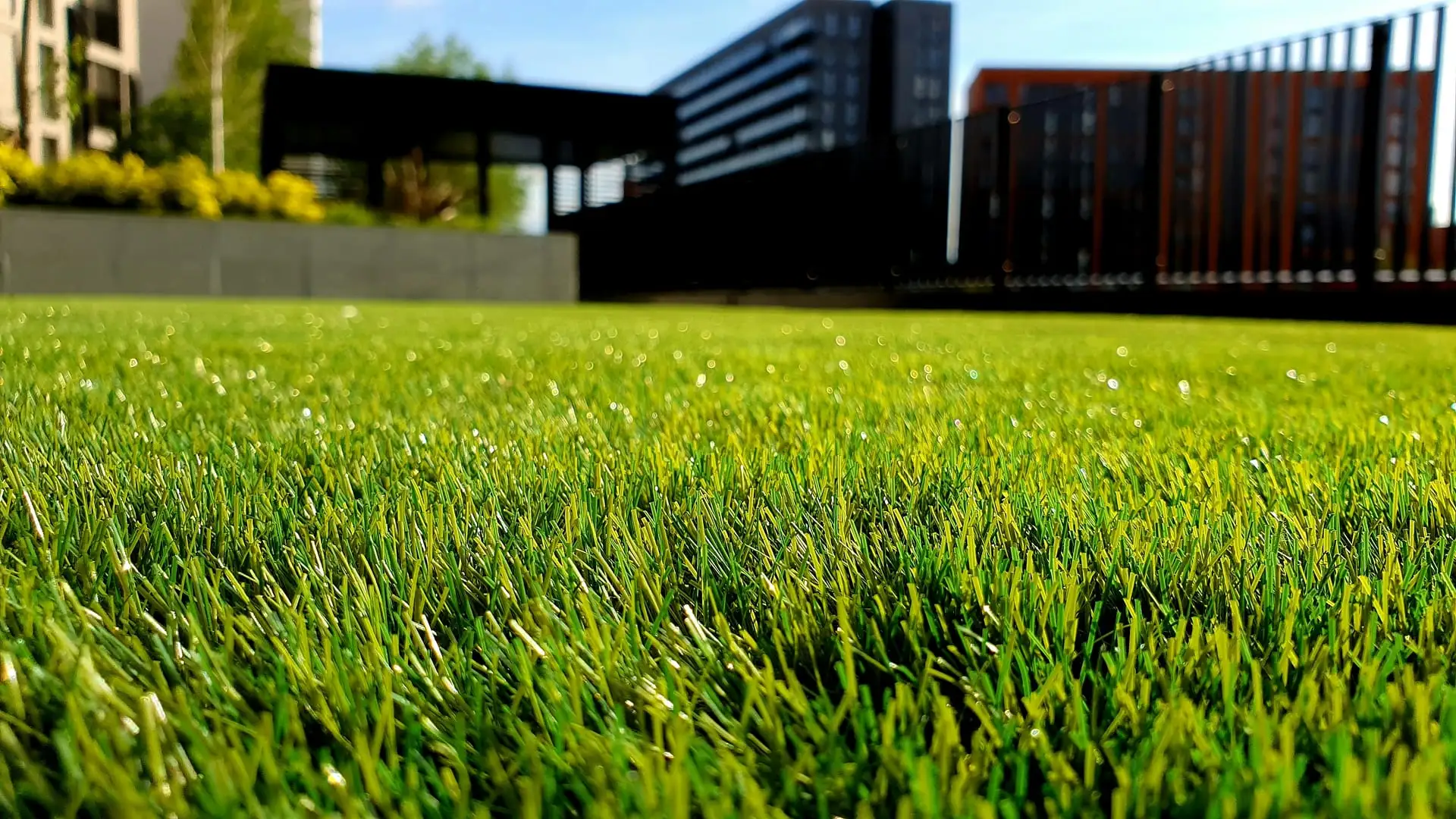
Drive through a Boerne neighborhood on a Friday afternoon and you can pick out the yards that were just mowed. Look a little closer and you can pick out the ones that were edged. The grass stops in a straight line at the driveway. The beds have a defined border. Nothing spills over the curb.
That line is what we mean by deep edging. It is the part of a lawn service people notice most, even when they can’t say exactly what they are looking at.
What deep edging is
Deep edging is a vertical cut into the soil everywhere the lawn meets something else: the driveway, the sidewalk, the curb, and the borders of your planting beds. We run a steel blade edger down the side of the concrete and cut past the runners into the dirt.
What you get is a small, clean gap between the grass and the hard surface. A thin strip of soil shows, and the turf on the lawn side stands up straight instead of flopping over the edge.
What a string trimmer does instead
Plenty of crews “edge” by tipping a string trimmer on its side and running it along the concrete. It looks fine for a day or two. What it actually does is knock down the blades that lean over the line. The runners underneath, the ones growing across the driveway, are still there.
Within a week or so the grass is back over the edge. After a season of that, the lawn has crept onto the concrete, and finding the original line takes real work.
| Deep edging | String trimming | |
|---|---|---|
| Tool | Steel blade edger | Spinning nylon line |
| What it removes | Runners and blades past the line | Only blades leaning over |
| How long it holds in summer | About two weeks | A few days |
| Effect on beds | Keeps runners out | Runners keep creeping in |
Why it matters more with Hill Country grasses
Most lawns around Boerne, Fair Oaks Ranch, and North San Antonio are St. Augustine or Bermuda. Both spread sideways. St. Augustine sends thick runners across the surface, and Bermuda spreads above and below ground. In the heat of summer either one can push onto a sidewalk faster than most people expect.
That sideways growth is why a trimmer pass does not hold. You are cutting the tops of plants that are still growing straight at the concrete. A deep edge cuts the runners themselves.
Beds are where this shows up most. Bermuda in particular moves into a mulched bed, roots there, and comes back no matter how often you pull it. A cut border slows that down and makes the bed much easier to keep clean. If a bed is already overrun, a bed cleanup with fresh mulch plus a cut edge is usually the fix.
The first edge versus every one after
If a yard has never had a real edge, or has gone a long time without one, the first visit takes longer. We have to find where the concrete actually ends, which is sometimes hidden under an inch or more of turf, and cut the lawn back to it. You may see a strip of bare soil along the drive for a week or two after that first cut while things settle.
After that it is maintenance. On a recurring schedule the edger follows a line that already exists, so each pass is quick and clean. That is a big reason our biweekly maintenance yards still look sharp on day ten.
Doing it yourself
You can cut a real edge at home. A stick edger with a steel blade or a manual half moon edger will both do it. If you try:
- Find the true edge of the concrete first, and push the blade down along the side, not across the top.
- Go slow on the first pass. Overgrown edges fight back, and a blade that jumps can chip concrete.
- Keep the cut vertical. Angling toward the lawn leaves a slope that grass crosses easily.
- Blow or sweep the soil and clippings off the concrete when you finish, or the next rain washes them back into the gap.
Watch for irrigation lines and low voltage wire near bed borders. They are often buried shallow right where you want to cut.
Why we do it on every visit
We built our mowing service around deep edging because it separates a lawn that was cut from a lawn that looks finished. It takes more time per visit than running a trimmer along the curb, and it needs the right equipment. Once the line is established, it is the simplest way we know to make a property look cared for from the street. If you are new to the area, our page on lawn care in Boerne covers the neighborhoods we run there.
If your edges have crept over the concrete and you want them back, call us at (210) 816-3562 for a free estimate.